How to Protect Your Appliances and Fixtures Between Guest Stays
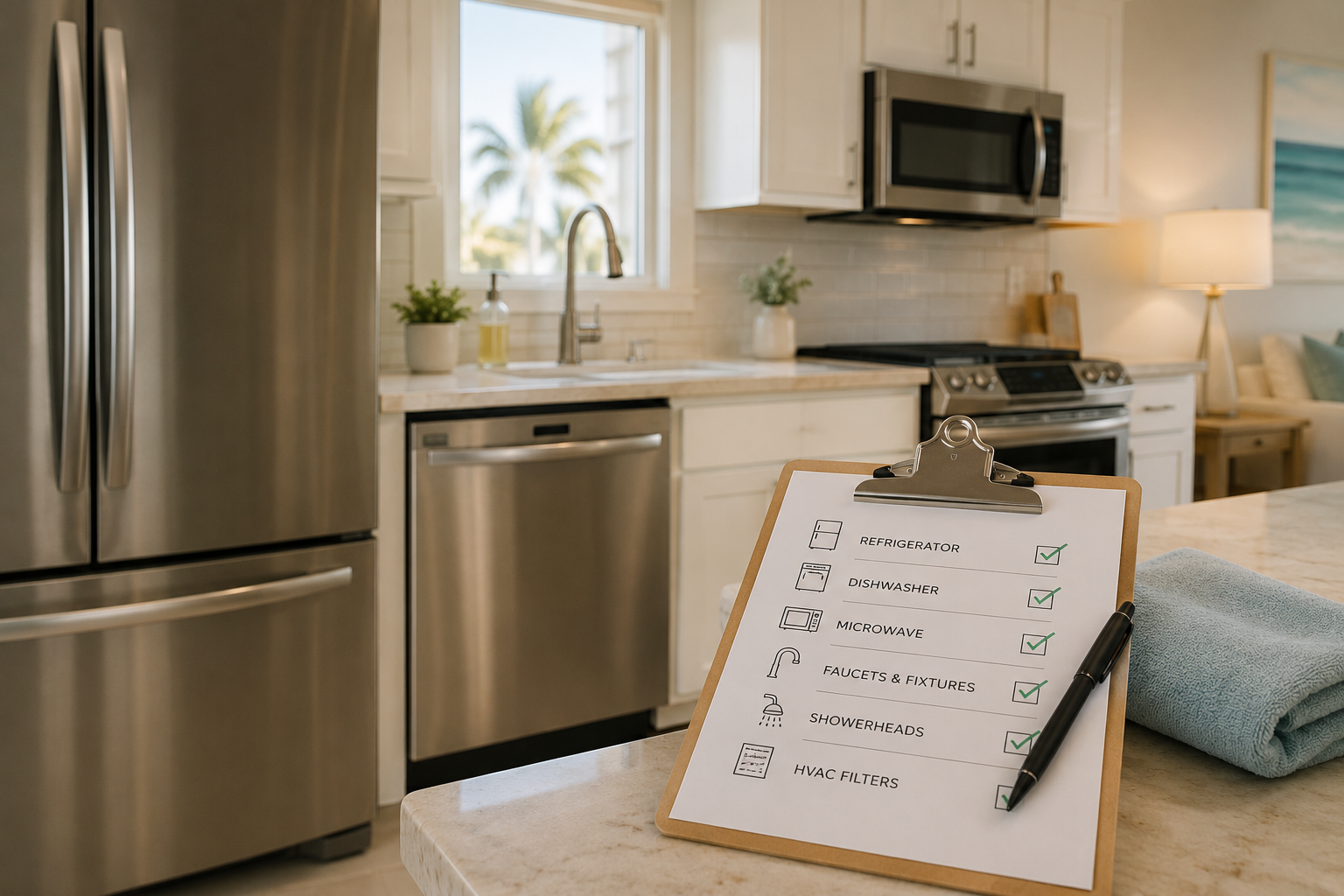
Most vacation rental owners think about appliance and fixture wear in big terms — the dishwasher that stops running, the faucet that fully fails, the AC that goes out mid-July. Those are the problems that get immediate attention because they have to.
The more expensive problems are the ones that don't announce themselves. They develop slowly, between stays, and by the time a guest notices them...or you do...the damage is already done.
In a coastal environment like the Grand Strand, appliances and fixtures face accelerated wear from humidity, salt air, hard water, and high guest turnover. Knowing what to monitor between stays is one of the simplest ways to extend the life of your property and protect your reviews at the same time.
The Kitchen Takes More Abuse Than You Think
Guests cook, and they don't always clean up the way you would. But beyond the obvious mess, there's surface-level wear happening to your kitchen appliances every single stay.
Refrigerator coils and door seals collect dust and food residue in coastal environments faster than in dry inland climates. A refrigerator working harder than it needs to because of dirty coils runs up your utility bill and shortens the compressor's life. Door gaskets that aren't wiped regularly grow mold along the seal edges which is something guests notice immediately when they open the door.
Dishwashers in areas with hard water like most of the Grand Strand accumulate mineral buildup inside the spray arms and along the door gasket. Left unaddressed, the spray arms clog and cleaning performance drops. Guests loading dishes that come out spotted or gritty leave reviews about it.
Microwave interiors get neglected in turnovers more often than any other appliance. Splatter baked onto the ceiling of the cavity doesn't just look bad but also causes hot spots, reduces efficiency, and eventually damages the interior coating.
Between stays, the check is simple: wipe the microwave interior, inspect the dishwasher door gasket, and run a quick visual on the refrigerator seals.
Bathroom Fixtures Wear Fastest in Coastal Rentals
Hard water and salt air are a damaging combination for bathroom fixtures, and bathrooms in vacation rentals get heavy use with little recovery time between guests.
Showerheads clog with mineral deposits from hard water, which reduces water pressure and causes uneven spray and is one of the more common guest complaints that goes straight into a review. A showerhead that hasn't been descaled in several months is already underperforming.
Faucet aerators suffer the same problem. The aerator screen traps sediment and calcium buildup and quietly restricts flow until the faucet feels like it's running at half pressure.
Caulk lines around tubs, showers, and sinks crack and peel with repeated moisture exposure. Once the seal breaks, water gets behind the surface and the damage that follows is far more expensive than a recaulk would have been.
Exhaust fans in coastal bathrooms work overtime. A fan that's clogged with dust and lint doesn't move air effectively, which means humidity stays elevated, mirrors take longer to clear, and the conditions for mold become more favorable after every guest shower.
None of these are major repairs when caught early. All of them become major repairs when they're not.
HVAC Filters Are the Most Overlooked Line Item
In Myrtle Beach and the surrounding Grand Strand, HVAC systems run longer and harder than in most markets. Cooling season stretches from April through October, and humidity management runs year-round.
A clogged air filter doesn't just reduce airflow. It forces the system to work harder to maintain temperature, drives up energy costs, and shortens the compressor lifespan. In a coastal rental with high occupancy, filters need attention more frequently than the manufacturer's general recommendation.
Guests who check in to a unit that smells musty or takes a long time to cool down mention it in reviews. The fix is almost always a filter that should have been changed weeks earlier.
A turnover team that flags filter condition as part of a standard walkthrough catches this before it becomes a guest experience problem.
What a Trained Eye Catches That a Checklist Misses
A cleaning checklist tells a crew what to clean. It doesn't tell them what to look for.
The difference between a turnover that just gets the unit guest-ready and one that actually protects your property is whether someone is walking through with the mindset of an owner who is keen in noticing the rust ring forming around the base of the toilet, the soft grout line in the shower corner, and the water stain appearing on the ceiling near the AC vent.
Those observations, documented and reported back to the owner after every clean, are what give remote property owners real visibility into what's happening to their asset between visits.
The Case for Consistency Over Crisis Management
The owners who spend the least on appliance and fixture repairs over time aren't the ones who respond fastest when something breaks. They're the ones who never let small problems become big ones.
Consistent professional turnovers with a trained inspector walking the property after every clean are how that happens in practice. It's not glamorous maintenance but it's the kind that works quietly in the background, stay after stay, protecting the investment you've made in your property.
If you're not sure whether your current turnover process includes the kind of property-level attention your Grand Strand rental needs, we're happy to walk you through what that looks like.